
Taipei Medical University Hosts 2026 UTS × UAAT Forum on Future Health Technologies: Advancing Weara
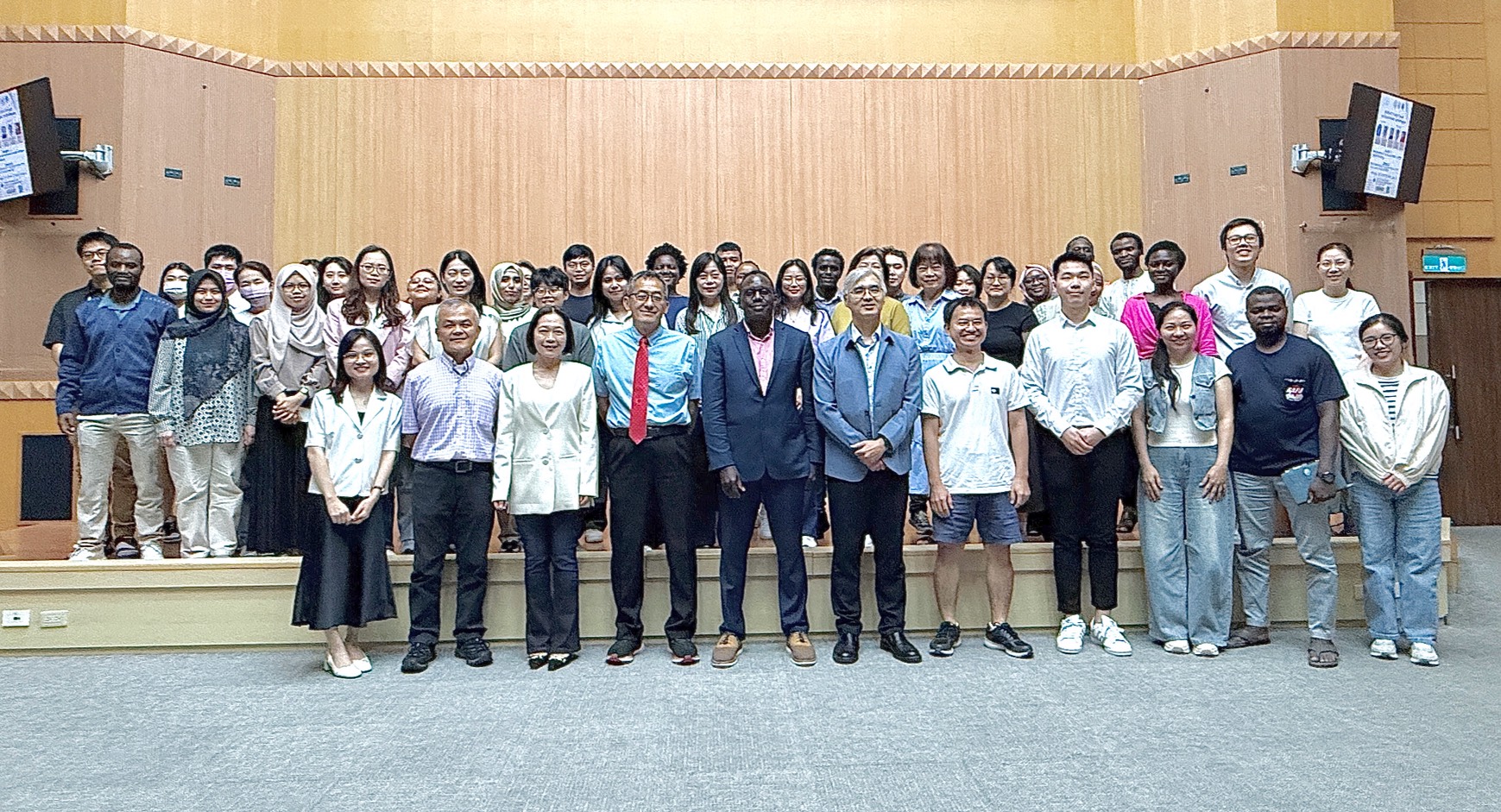
International collaboration between Taipei Medical University and the University of Texas at Austin highlights innovations in wearable technology, blood pressure monitoring, exercise science, and future healthcare.
Taipei Medical University (TMU) hosted the 2026 UTS × UAAT Forum on Future Health Technologies on June 18, bringing together researchers, healthcare professionals, faculty members, and students to explore emerging innovations in digital health, wearable health technologies, continuous blood pressure monitoring, healthy aging, and precision healthcare.
Supported by Taiwan's Ministry of Education through the University Academic Alliance in Taiwan (UAAT) initiative, the forum featured two internationally recognized scholars from the University of Texas at Austin (UT Austin), a global leader in engineering, health sciences, and innovation.
In her opening remarks, Professor Pei-Shan Tsai, Vice President of Taipei Medical University and Principal Investigator of the UAAT–UTS collaborative project, emphasized the importance of international partnerships in addressing global health challenges.
"Healthcare is entering an era where digital technologies, artificial intelligence, wearable devices, and data-driven innovations are transforming the way we prevent disease, monitor health, and deliver care," said Professor Tsai. "Through partnerships between Taipei Medical University and leading institutions such as the University of Texas at Austin, we can accelerate innovation and create meaningful impact on population health and healthy aging."
Smart Wearables and Continuous Blood Pressure Monitoring
The first keynote lecture, Smart Wearables for Continuous Health and Blood Pressure Monitoring, was delivered by Professor Deji Akinwande, Chandra Family Professor in the Department of Electrical and Computer Engineering at UT Austin.
Professor Akinwande presented groundbreaking developments in wearable sensors, flexible electronics, and next-generation health monitoring technologies that enable continuous and non-invasive tracking of physiological parameters. His research demonstrates how wearable technologies can support early disease detection, personalized healthcare, remote patient monitoring, and preventive medicine.
As healthcare systems worldwide increasingly embrace digital transformation, wearable health devices are expected to play a critical role in managing chronic diseases, supporting aging populations, and improving access to healthcare.
Blood Flow Restriction Training and Healthy Aging
The second keynote lecture, Blood Flow Restriction Training: Overview of the New Exercise Training Modality, was presented by Professor Hirofumi Tanaka from the Department of Kinesiology and Health Education at UT Austin.
Professor Tanaka discussed the scientific evidence supporting blood flow restriction (BFR) training, an innovative exercise approach that enables improvements in muscle strength and physical function while using relatively low exercise intensities. The technique has attracted increasing attention in the fields of rehabilitation, sports science, healthy aging, frailty prevention, and chronic disease management.
With populations aging rapidly across many countries, including Taiwan, innovative exercise interventions such as BFR training may offer new opportunities to promote mobility, independence, and quality of life among older adults.
Strengthening International Collaboration in Future Health Technologies
The forum reflects Taipei Medical University's commitment to advancing research and education in digital health, precision medicine, biomedical innovation, healthy aging, and interdisciplinary healthcare technologies.
Participants from diverse disciplines engaged in discussions on how engineering, health sciences, and clinical practice can work together to address future healthcare challenges. The event also highlighted the growing collaboration between TMU and UT Austin in research, education, and talent development.
As a leading academic health university, Taipei Medical University continues to foster global partnerships that advance scientific discovery, healthcare innovation, and health equity. Through initiatives such as UAAT, TMU is helping shape the future of healthcare by connecting world-class researchers and promoting transformative solutions for healthier societies.
Keywords
Taipei Medical University, TMU, University of Texas at Austin, UT Austin, UAAT, future health technologies, wearable health technology, smart wearables, blood pressure monitoring, digital health, precision healthcare, healthy aging, blood flow restriction training, exercise science, biomedical innovation, health technology, preventive healthcare, international collaboration, healthcare innovation.